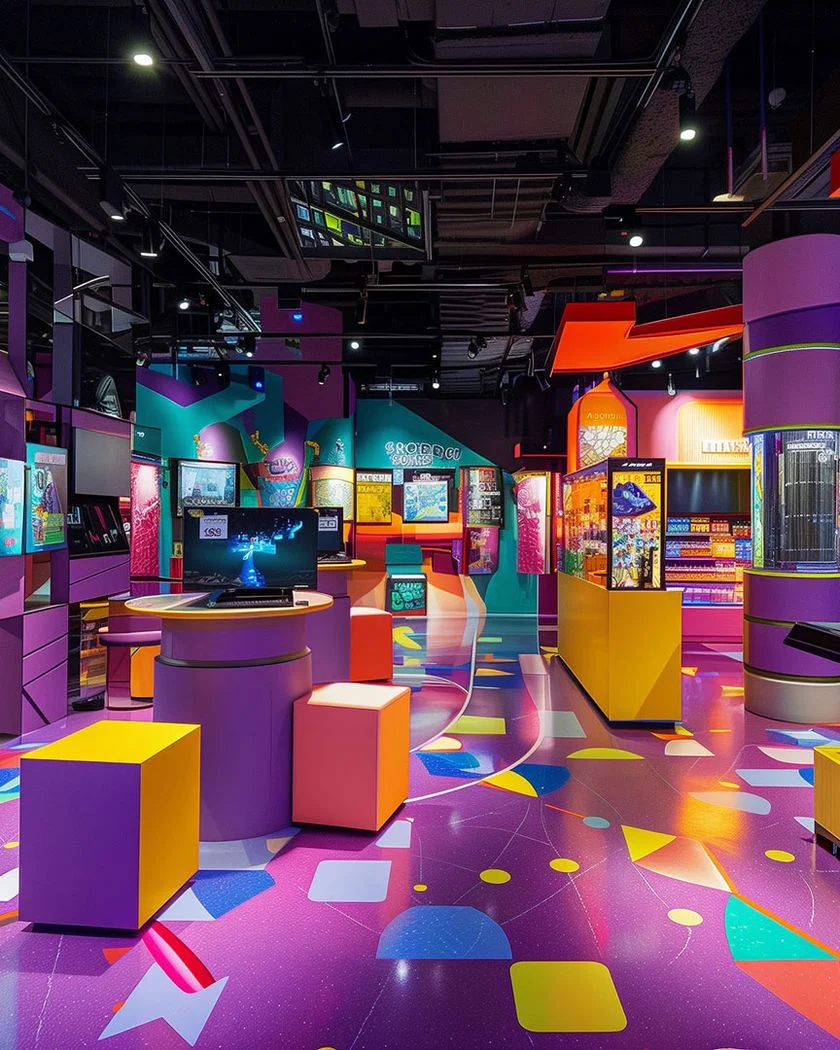
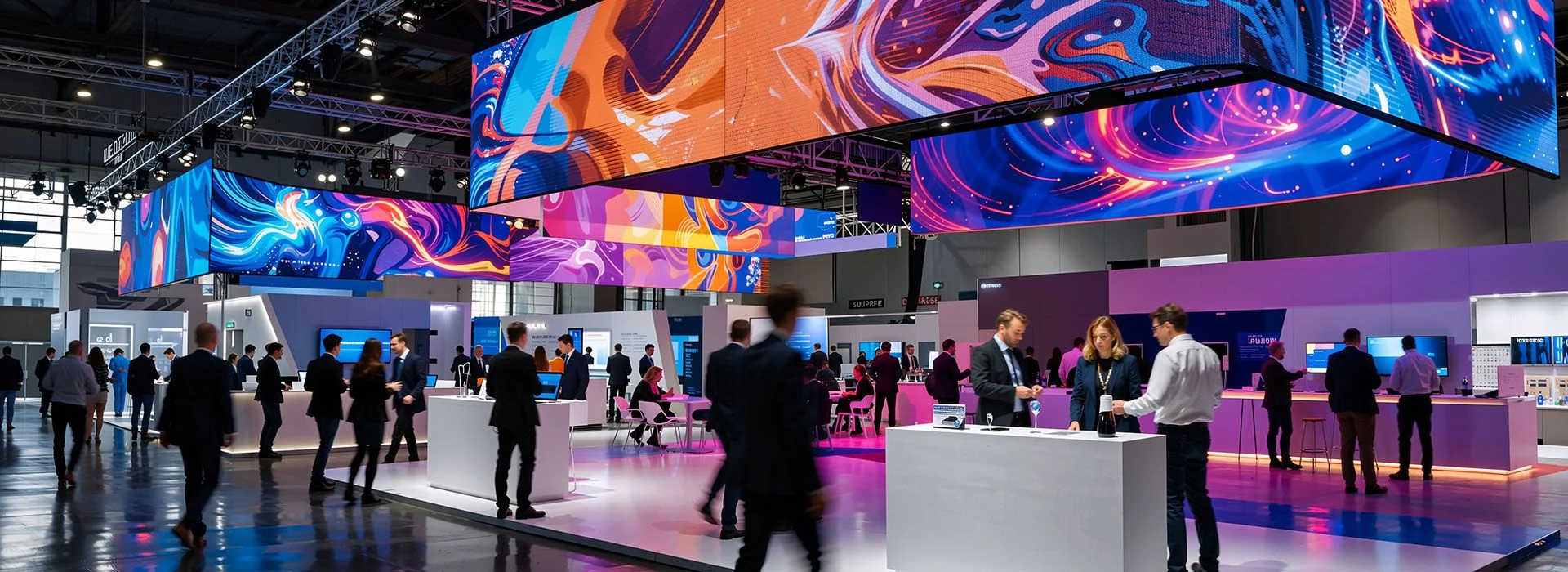
Walk any major show floor and you’ll see the same split every time. A handful of booths pull people in, hold them, and turn that attention into real conversations. Most don’t. The difference rarely comes down to budget alone, it comes down to a specific set of trade show exhibit design decisions that the strongest exhibitors get right, show after show.
The window to capture an attendee’s attention has been shrinking for years, and the booths that win are the ones built around that reality from the start. So what do they actually have in common? Here’s what we look at with every client before the formal design process even begins.
They Communicate Fast, Because Attendees Decide Fast
Trade show floors are loud, visually crowded, and full of competing claims for attention. Attendees don’t wander into a booth to figure out what you do. They give a precursory glance, process, and decide whether to stop in a matter of seconds from across the aisle.
The strongest architectural booths build for that reality: a clear visual hierarchy, height and lighting that work from a distance, and one core message that lands before a visitor ever reaches the carpet edge. Everything else: the product details, the deeper demo, the conversation with sales, happens after that first read, not instead of it.
If someone has to study your booth to understand what you do, you’ve already lost most of the floor.
They’re Designed Around a Behavior, Not Just a Layout
A lot of booth design starts and ends with floor plan logistics: where the reception desk goes, where the meeting space goes, where the literature lives. The best exhibits start somewhere else entirely, with the behavior they want from an attendee.
Do you want someone to stop and watch? Touch something? Sit down for a real conversation? Scan something and walk away with next steps already queued up? Every strong exhibit we’ve built points toward one of those outcomes on purpose, and the layout, lighting, and staffing plan all follow from that decision rather than being bolted on afterward.
This is also where booths can quietly pull double duty, generating sales conversations and supporting other goals, like recruiting or partner engagement, without diluting either one. We’ve seen this firsthand: a booth built to showcase a product in action can be just as effective at turning the right passerby into a candidate as it is at turning them into a lead.
They Make the Brand Part of the Architecture, Not an Afterthought
Booth visitors absorb more than your tagline. A noticeable share of attendees say a booth’s visual polish directly shapes how they judge the quality of the product behind it, fair or not, the exhibit is the first product impression for a lot of buyers.
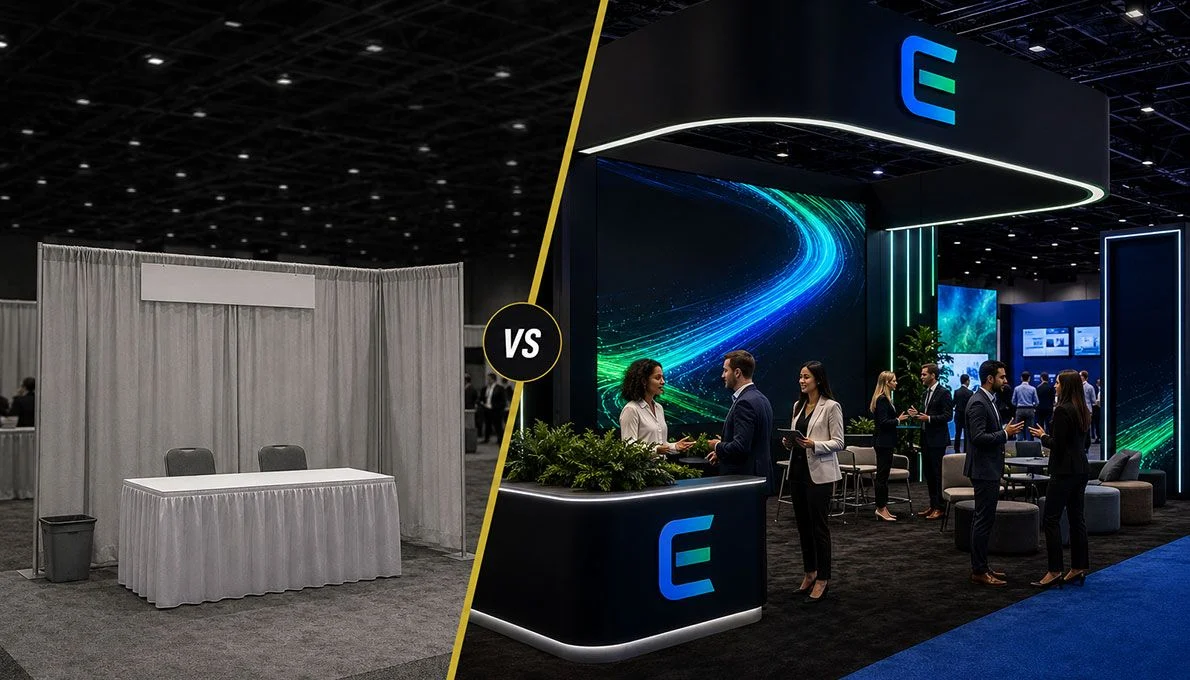
That means materials, finishes, color, and graphics aren’t decoration layered on top of the brand, they need to be the brand, expressed in three dimensions. The best exhibits feel like a natural extension of the company’s identity rather than a generic trade show shell with a logo dropped in.
They Build in Room to Actually Talk
Foot traffic is only half the job. Once you’ve earned a second look, the booth needs somewhere for that interest to go: a demo station, a seating area, a quiet corner away from aisle noise. A surprisingly large share of buying conversations and follow-ups that start at a trade show come from unplanned, walk-up visits rather than pre-scheduled meetings, which means the exhibit itself is often doing the work of starting that relationship, not just collecting a badge scan.
Booths that skip this step (all visual impact, no functional space) tend to generate attention without generating much else.
They’re Built to Be Used Again
The strongest trade show programs treat the exhibit as an asset, not a one-off expense. A well-designed architectural or modular system gets reconfigured for different footprints, refreshed with new graphics, and redeployed across a show calendar, which changes the entire cost equation versus building something new for every event.
That kind of reusability only works if it’s designed in from the start: modular components, durable materials, and a system flexible enough to shrink, grow, or rearrange depending on the show.
The Common Thread
None of this is really about square footage or budget tier. It’s about treating exhibit design as a strategic decision, tied to a clear goal, a specific audience behavior, and a brand story, rather than a logistics task to check off before the show opens.
The booths that get remembered are the ones where every design choice, from the height of the structure to the flow of the floor plan, was made on purpose.
Planning Your Next Show?
If you’ve got an event on the calendar and you’re rethinking what your booth should actually be doing for you, that’s exactly the conversation we have with clients before any design work starts. Our trade show and exhibit design team builds exhibits around your goals first, whether that’s brand awareness, lead generation, or recruiting, and the physical structure second.
Talk to Our Events TeamExclaim, Inc. is a Creative Experiences Agency partnering with clients on Events & Experiential, Video & Media, and Digital & Design, from a single exhibit to a full show calendar.