For years, the default B2B video content strategy was simple: put an executive in a chair and let them talk to a camera. But while that “talking head” format isn’t completely obsolete, relying on a static, uninspired execution definitely is.
If your marketing strategy still depends entirely on a stationary executive reading a dry script, you are leaving attention, and ROI, on the table. Audiences today expect dynamic storytelling; they want to see your brand in motion. It’s time to rethink the traditional corporate interview and discover what your team should actually be filming instead.
The Evolving Role of Talking Head Videos
Talking head videos are a powerful way to build trust, establish credibility, and create a genuine human connection with your audience. They work best as one piece of a broader video strategy rather than the foundation for every piece of content.
Today’s highest-performing brands aren’t abandoning interviews and testimonials, they’re complementing them with a wider variety of storytelling techniques. By incorporating dynamic visuals, behind-the-scenes moments, customer experiences, product demonstrations, and other engaging formats, they’re capturing more attention and creating content that resonates with audiences in new ways.
The real shift in video marketing isn’t that interviews and testimonials have lost their value. It’s that relying on the same interview-style format for every video leaves opportunities for greater engagement, stronger storytelling, and better ROI on the table. Expanding beyond the traditional talking head approach allows every video to make a bigger impact.
Why the Shift Is Happening Now
Understanding the “why” behind this shift is essential for any modern video strategy. We aren’t just seeing a change in trends; we are seeing a fundamental change in viewer psychology and platform mechanics. Here is what is driving the move away from traditional interviews and toward more active storytelling.
Most Video Is Watched on Mute
When audiences scroll through platforms like LinkedIn or Instagram, many videos are experienced with the sound off. This environment offers a unique opportunity to create visual-first content that captures attention immediately, regardless of audio settings. By prioritizing visual storytelling, you ensure your message is accessible and engaging from the very first frame, allowing your content to connect effectively with every viewer, whether they’re listening or simply watching.
Attention Is Earned in Motion, Not Narration
The videos that stop the scroll open with something happening, not a static shot of someone settling into a chair. By the time a traditional talking head video reaches its first real point, a lot of viewers have already scrolled past. In a feed built on movement, stillness reads as a signal to keep scrolling.
Footage Builds Trust Faster Than Statements
Audiences trust what they see more than what they’re told. Show the product working. Show the process. Show the real moment, not a polished summary of it after the fact. A four-second close-up of something actually happening builds more credibility than forty seconds of confident voiceover ever will.
Audiences trust what they see more than what they’re told.
So What Should You Be Filming Instead?
This is where a smarter B2B production approach comes in. Instead of defaulting to interviews, the strongest video content strategies now lean on:
- B-roll-driven storytelling where the message comes through what’s on screen, not just what’s being said.
- Real moments captured on location on the floor, in the shop, at the show. Footage that couldn’t be staged because it’s actually happening in real time.
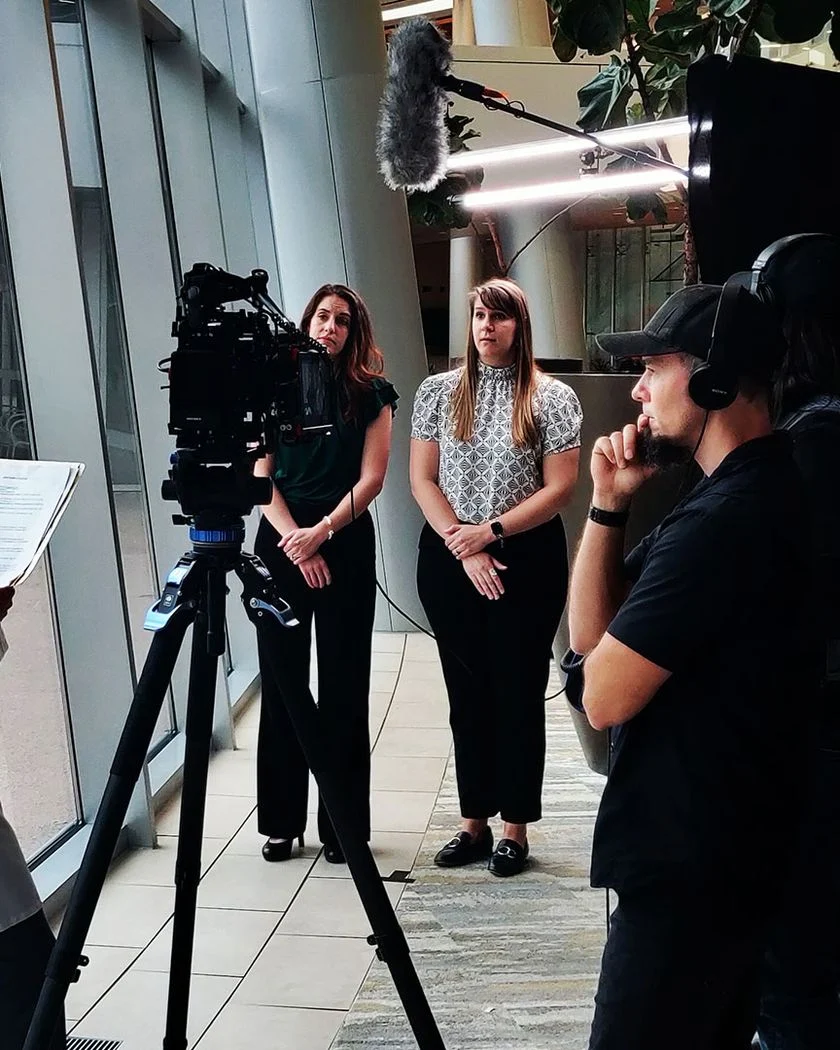
- Action-anchored interviews when someone is talking, the shot is built around action and context instead of a chair and a backdrop, so the video still works even with the sound off.
This isn’t about abandoning talking heads altogether. It’s about treating them as one tool in a broader video production toolkit, not the whole toolbox.
What This Means for Your Brand’s Video Strategy
If your video library is mostly interviews and sit-down testimonials, it’s worth asking a simple question: would this video still work if someone watched the first five seconds with the sound off? If the answer is no, that’s usually a sign the story is being told through narration instead of through footage, and that’s exactly the gap that’s costing brands attention on today’s platforms.
The brands winning attention right now aren’t necessarily the ones talking the most. They’re the ones showing the most, and building their message into footage that holds up on mute, in a feed, and on a phone screen.
Let’s Film Something Worth Watching
This is the thinking behind the video and media production work we build for clients: less “record the talking points,” more “show the thing that’s actually worth watching.” Whether that’s a product in action, a process on the floor, or a moment that couldn’t be staged, we help brands build video content that earns attention before a single word is spoken.
If your current video strategy is leaning too hard on talking heads, let’s talk about what to film instead.
Talk to Our Video Team