Most video projects start with a familiar request, “We need a video”. It might be for a conference, a product launch, LinkedIn, or an internal initiative.
The conversation then quickly moves to logistics. How long should it be? Who should be on camera? Where will we shoot?
But before any of that, there’s a more important question to answer: After someone watches this video, what should they know, feel, and do?
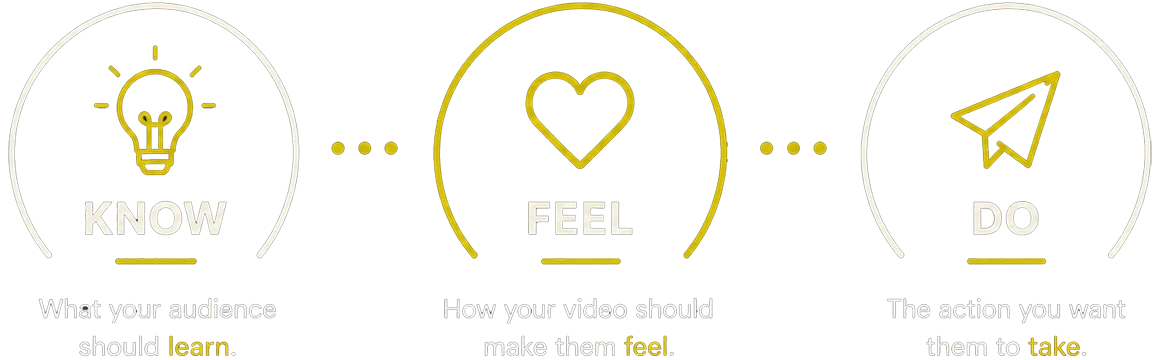
Those 3 outcomes (Know, Feel, Do) should shape every video project. Not as competing goals, but as 3 layers of impact.
When the best videos work, they usually touch all 3.
Know: What Should Your Audience Learn from a Video?
Every video communicates information, whether intentionally or not.
Sometimes the goal is obvious. You may need to explain a new product, introduce a service, or clarify a strategy. In those cases, the “know” piece is front and center.
But even emotional or inspirational videos still leave the audience with something new to understand. Maybe they walk away knowing what your organization values, what problem you solve, or why something matters.
If viewers finish a video thinking, “Okay, now I get it,” the know layer has done its job.
Feel: How Video Creates Emotional Connection
Information alone rarely sticks. What makes people remember something is how it made them feel.
This is where storytelling matters. Real voices. Real moments. Music, pacing, and visuals help create a mood rather than just delivering facts.
When a video works on the emotional level, it can create energy in a room, pride within a team, or trust with an audience. It turns information into something people actually care about.
You may not always be aiming for a big emotional reaction, but every video still benefits from asking: How should the audience feel while watching this?
Before starting your next video, answer these 3 questions:
- What should the audience know after watching?
- What should they feel during the video?
- What should they do next?
Once those answers are clear, creative decisions get much easier. The story sharpens. The interviews become more focused. The final piece feels purposeful instead of busy.
Because the best videos don’t just show something, they teach something, create a feeling, and move people to act.
Talk to Our Video Team